🥐Mexican Sweet Bread: Types, Names and How to Eat Pan Dulce
Mexican sweet bread, or pan dulce, is the family of sweet breads sold at Mexican bakeries for breakfast and the evening merienda: conchas, cuernos, orejas, polvorones, marranitos and many more, each with its own name. You pick it out with a tray and tongs, pair it with coffee or hot chocolate, and for a lot of us living far from Mexico, it tastes like home.
Updated · 5 min read · By the MexGoodies team
In this guide ▾
What is Mexican sweet bread?
Mexican sweet bread is the whole lineup of sweet, single-serving pieces made at Mexican bakeries: yeast breads, puff pastries and cookie-like breads, usually topped with sugar, eaten at breakfast or at the merienda, the light evening snack-meal many Mexican families still keep.
Its story starts with wheat, which arrived in Mexico with the Spanish in the 16th century. Over time, Mexican bakers picked up European techniques, especially from French baking, and made them their own: new shapes, colorful toppings and playful names passed down from one generation to the next.
There's also a ritual that looks the same on both sides of the border: you walk into the panadería, grab a tray and a pair of tongs, choose your pieces one by one and pay at the counter, where they hand them back in a paper bag.
What are the types of Mexican sweet bread?
There are hundreds of sweet breads in Mexico and every region has its own, but these are the names of Mexican bread you'll see at a lot of panaderías:
And don't forget two more: the dona, the Mexican bakery doughnut, glazed, sugared or chocolate-dipped, and the sweet empanada, a half-moon turnover filled with pumpkin, pineapple, apple or cajeta, Mexico's caramelized milk spread.
| Name | What it's like | How to eat it |
|---|---|---|
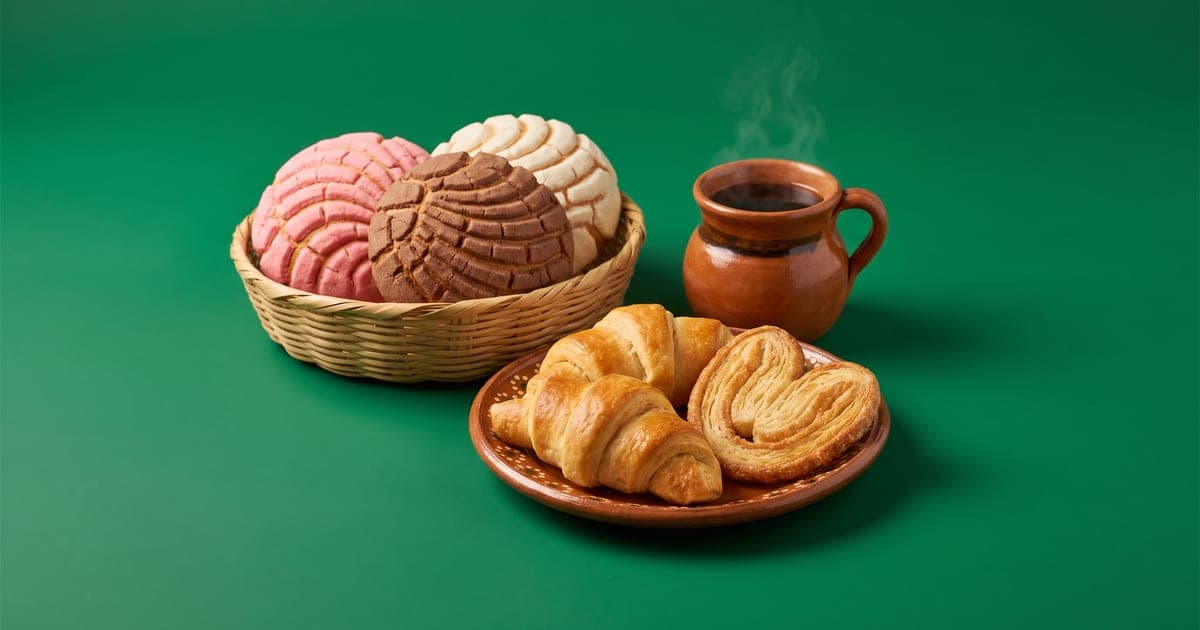
| Concha | A soft round roll with a sugar crust scored like a seashell; the topping can be white, chocolate or pink | On its own or dunked in coffee or hot chocolate |
| Cuerno | A crescent-shaped bread, a cousin of the croissant, softer and less flaky | Plain, or with butter or jam |
| Oreja | Puff pastry with caramelized sugar in a double spiral, like a pair of ears (the French call it a palmier) | On its own, crisp, with coffee |
| Polvorón | A thick, crumbly shortbread-style cookie; some bakeries make them in colors like pink | With milk or coffee, in small bites since it crumbles |
| Marranito (cochinito or puerquito) | A pig-shaped bread sweetened with piloncillo, unrefined cane sugar sold in cones, and spiced with cinnamon; often called a Mexican gingerbread pig | With a glass of cold milk or with coffee |
| Bigote | A long, curved bread topped with sugar that looks like a mustache | Plain or with café con leche |
| Rebanada | A thick slice of soft bread spread with a butter and sugar topping | With coffee or hot chocolate |
| Novia | A soft yeast bread with a sugar topping; its shape varies by bakery and region | With coffee or milk |
| Mantecada | A fluffy muffin-style cake baked in a paper cup, often a red one | Peel off the paper and eat it plain or with milk |
| Garibaldi | A small cake glazed with apricot jam and covered in white sugar sprinkles called chochitos | With coffee, over a plate, because the sprinkles fall everywhere |
What are the seasonal Mexican sweet breads?
Mexico's two big seasonal breads are pan de muerto, baked in the weeks around Día de Muertos, and the rosca de reyes, which is cut on January 6.
Pan de muerto is a round, soft bread scented with orange blossom, orange or anise depending on the region, decorated with little dough bones on top and dusted with sugar. People eat it from late October into early November and also place it on the ofrenda, the altar families build to remember their loved ones.
The rosca de reyes is a ring-shaped bread decorated with strips of ate (Mexican fruit paste) and candied fruit, with one or more tiny baby figurines hidden inside. It's cut on January 6, Three Kings Day, and whoever finds a figurine has to treat everyone to tamales on February 2, Día de la Candelaria. Both breads are usually served with hot chocolate or champurrado.
Pan de muerto
Día de Muertos
- A round, soft bread
- Scented with orange blossom, orange or anise, depending on the region
- Little dough bones on top and a dusting of sugar
- Eaten from late October into early November, and placed on the ofrenda
Rosca de reyes
January 6, Three Kings Day
- A ring-shaped bread
- Decorated with strips of ate and candied fruit
- Hides one or more tiny baby figurines
- Whoever finds a figurine treats everyone to tamales on February 2
What do you drink with pan dulce?
Pan dulce goes with a hot drink, most often café de olla, Mexican hot chocolate or champurrado, and in the morning a glass of milk works too. These are the classic pairings:
The custom is to sopear, which means dunking the bread in your drink before each bite. Conchas and polvorones fall apart fast, so be quick about it.
- Café de olla: coffee simmered with cinnamon and piloncillo, traditionally in a clay pot.
- Mexican hot chocolate: table chocolate like Abuelita, frothed with a wooden molinillo.
- Champurrado: a thick, warm masa and chocolate drink, perfect for cold days.
- Café con leche or cold milk: the everyday choice, for breakfast or the merienda.
How do you keep pan dulce fresh?
Bakery pan dulce is best the day you buy it or the next day, kept in a tightly closed bag or a lidded container so it doesn't dry out. Skip the fridge: the cold makes it go stale faster.
If it's already hard, a few minutes in a warm oven or on a comal brings back some of the softness. Packaged pan dulce keeps longer while sealed; check the best-by date on the package.
- When bakery pan dulce is at its best
- Today or tomorrow
- Or a lidded container, so it doesn't dry out
- Sealed bag
- The cold makes it go stale faster
- No fridge
- Or a comal, for a few minutes if it's gone hard
- Warm oven
Where to buy Mexican sweet bread in the U.S.?
Fresh conchas, cuernos and orejas come from a Mexican panadería, and if there's one near you, it's worth making it a weekly stop. To keep sweet Mexican bread in the pantry at all times, packaged pan dulce is the practical option.
MexGoodies carries packaged pan dulce from Mexican brands like Bimbo and Tía Rosa: mantecadas, cuernitos, chocolate bigotes, polvorones, doughnuts, cinnamon rolls and nut pound cake. They're original products from Mexico, and the store ships anywhere in the U.S. in 3 to 7 days (Canada too).
Everything in this guide, shipped to your door
Frequently asked questions
Are Mexican pastries the same as pan dulce?
Yes. Pan dulce is the Mexican name for sweet bread and pastries: conchas, cuernos, orejas, marranitos and many more, usually eaten with coffee or hot chocolate.
How many types of Mexican sweet bread are there?
Nobody has an exact count. There are hundreds of types, and every region and every bakery has its own pieces and names.
Why is it called a concha?
Because of its sugar topping, which is scored with curved lines so it looks like a seashell. Concha means shell in Spanish.
What is a merienda?
It's Mexico's light late-afternoon or evening meal, and very often it's exactly this: pan dulce with coffee or hot chocolate.
Is pan dulce the same as Mexican sweet bread?
Yes, in the U.S. pan dulce usually means Mexican sweet bread. Just know that in Argentina and Uruguay, pan dulce is a Christmas bread similar to panettone.
Are marranitos gingerbread?
Not exactly. They're often called Mexican gingerbread pigs, but their main flavor comes from piloncillo and cinnamon, and they're softer and more bread-like than most gingerbread cookies.
Craving it already? 😏
More recipes & guides
See all →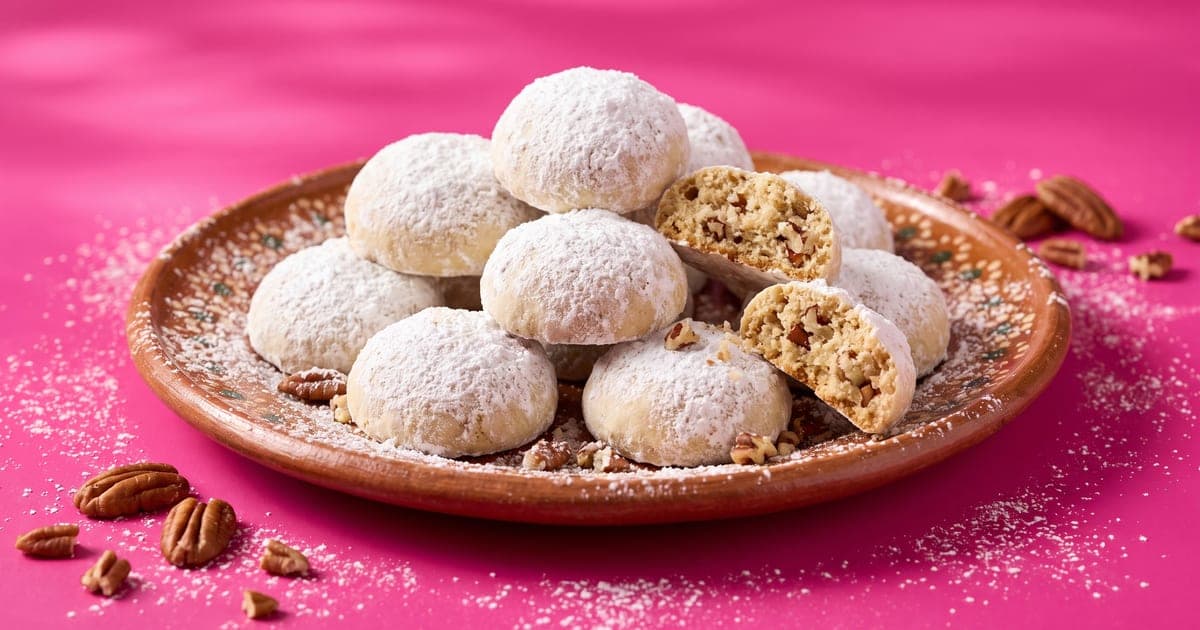 Candy & desserts
Mexican Wedding Cookies (Polvorones): An Easy Homemade Recipe
 Candy & desserts
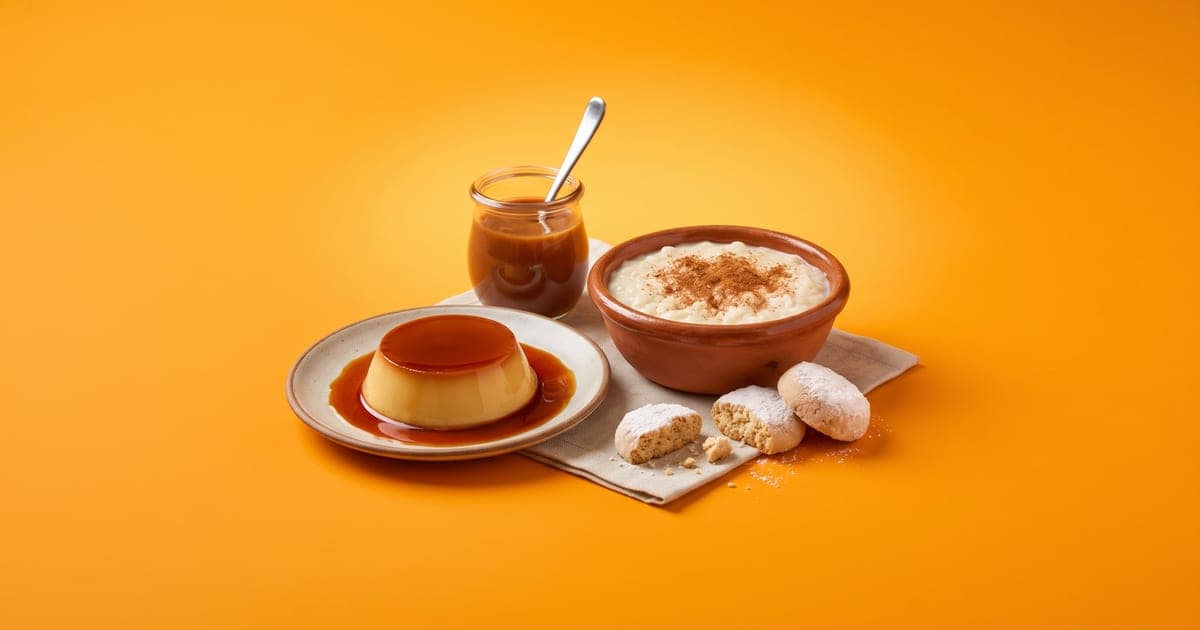
Mexican Desserts: The Classics Every Family Knows
 Candy & desserts
What Is Cajeta? Mexico's Goat Milk Caramel, Explained
 Candy & desserts
De la Rosa Mazapan: What It Is, What It's Made Of and How to Open It
 Candy & desserts
Lucas Candy: What It Is, Every Kind and How to Eat It
 Candy & desserts
What Is Chamoy? Mexico's Sweet, Sour and Spicy Sauce, Explained