
🥜De la Rosa Mazapan: What It Is, What It's Made Of and How to Open It
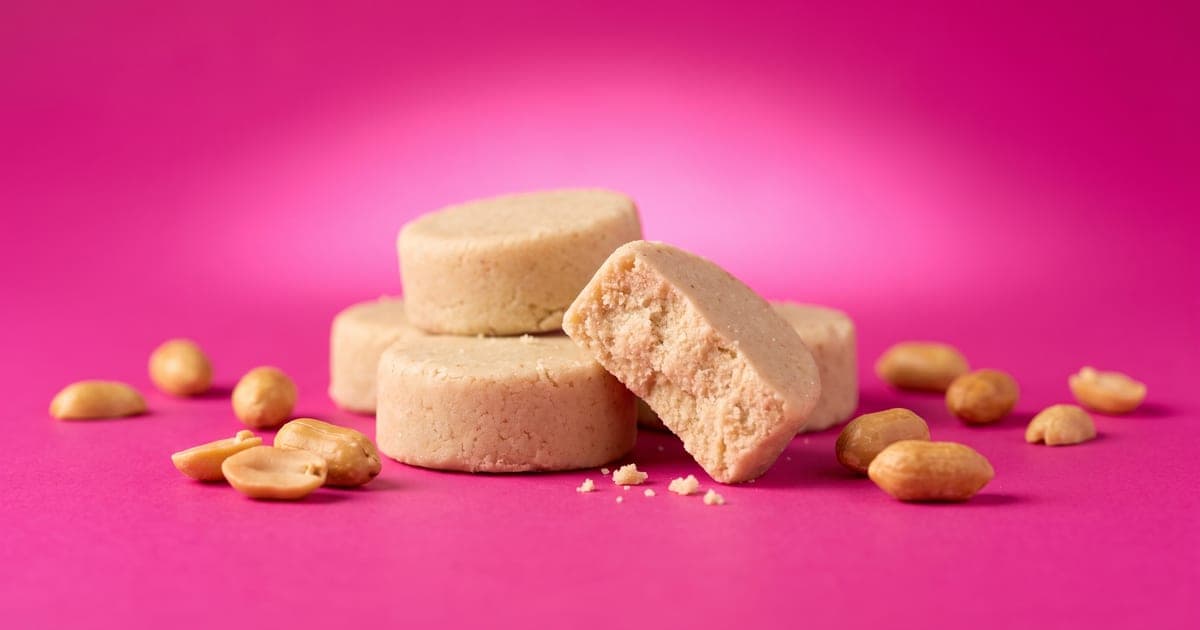
De la Rosa mazapan is a Mexican candy made from ground peanuts and sugar, pressed into a little disk that melts in your mouth the moment you bite it. Unlike European marzipan, which is made with almonds, Mexican mazapan is made with peanuts, and the one from De la Rosa, the candy company born in Guadalajara, Jalisco, is the one most of us grew up with: the one with the rose on the wrapper.
Updated · 5 min read · By the MexGoodies team
In this guide ▾
- What is mazapan?
- What is De la Rosa mazapan made of?
- Why does mazapan crumble, and how do you open it without breaking it?
- What sizes of De la Rosa mazapan are there?
- Mexican mazapan vs. European marzipan: what's the difference?
- What can you make with mazapan?
- Where to buy De la Rosa mazapan in the U.S.?
- FAQ
What is mazapan?
Mazapan (mazapán in Spanish) is a Mexican candy made mostly from ground peanuts and sugar, pressed into a round disk and wrapped piece by piece. The most famous one is De la Rosa mazapan. The texture is dry and sandy, it dissolves on your tongue, and it tastes like sweet peanut, a bit like peanut butter but lighter and not sticky at all.
It's made by De la Rosa, the candy company born in Guadalajara, Jalisco, which also makes Pulparindo. According to published accounts of the brand's history, the mazapan was created in the mid-20th century as a Mexican take on Spanish marzipan: the almonds were swapped for peanuts, which were easier to find in Mexico. That's how it became the Mexican candy mazapan you find at every corner store, in every piñata and in every bolo, the little bag of candy handed out at baptisms and kids' parties.
What is De la Rosa mazapan made of?
De la Rosa mazapan is made of ground peanuts and sugar, and some versions also list artificial flavor. That's how it appears on the product pages in our store: the Original and the Mini list ground peanuts and sugar, and the 30-piece box lists sugar, peanuts and artificial flavor.
The sugar-free version swaps the sugar for sucralose, the sweetener sold as Splenda, and adds binders, ingredients that help the piece hold together. Peanuts are the main ingredient in all of them, so mazapan is not for anyone with a peanut allergy. If you have any other allergy, always read the label on the package you buy, since the allergen list can vary from one version to another.
Why does mazapan crumble, and how do you open it without breaking it?
Mazapan crumbles because it's almost nothing but ground peanuts and sugar pressed together, with no egg or anything else acting as glue. That fragility is part of the charm, and opening one in a single piece is a challenge a lot of us have been chasing since childhood.
No trick is foolproof, but these are the home tips people pass around:
Step 1: Squeeze it first
While it's still wrapped, press gently with your fingers all around the edge to compact it.
Step 2: Open it on the table
Not in midair: rest it on a flat surface and peel the wrapper slowly, starting at the edge.
Step 3: Hold it by the rim
Don't pull from the middle or bend it: hold it by the rim while you take off the plastic.
Step 4: If it breaks, use it
No big deal: eat it with a spoon, sprinkle it over a dessert or blend it into a shake.
What sizes of De la Rosa mazapan are there?
De la Rosa mazapan comes in several sizes and versions, from the mini for party favor bags to the giant one for a serious craving. These are the ones you'll find in our store:
- Original: the classic piece, the one you remember.
- 30-piece box: the one with the red logo, to keep at home, at the office or to pass around at a party.
- Mini, in a 60-piece box: the same mazapan in a small size, perfect for party bags, piñatas and candy tables.
- Gigante, in a 20-piece box: a bigger disk for anyone who never stops at one.
- Sugar-free: sweetened with Splenda, with the same sandy texture that melts in your mouth.
- To compare: Azteca peanut mazapan, another Mexican brand, also comes in a 30-piece box.
- The red-logo box, for home or the office
- 30 pieces
- For party bags, piñatas and candy tables
- 60 minis
- A bigger disk, for anyone who never stops at one
- 20 giants
- Sweetened with Splenda, same texture
- Sugar-free
Mexican mazapan vs. European marzipan: what's the difference?
The main difference is the nut: Mexican mazapan is made with peanuts and European marzipan is made with almonds. That changes everything else, from the texture to the shape to the time of year people eat it:
So if someone hands you a piece of marzipan expecting it to taste like De la Rosa mazapan, they're in for a surprise: they're cousins, not twins.
| Feature | Mexican mazapan | European marzipan |
|---|---|---|
| Base | Ground peanuts | Ground almonds |
| Texture | Dry and sandy, it crumbles | Soft paste you can shape |
| Other ingredients | Sugar, plus flavoring in some versions | Sugar, and egg white in some recipes |
| Shape | Individually wrapped round disk | Bars, little fruit or animal figures, or chocolate-covered |
| When people eat it | Year-round: corner stores, piñatas and party bags | Closely tied to Christmas in countries like Spain and Germany |
What can you make with mazapan?
Besides eating it on its own, mazapan works as an ingredient in drinks and homemade desserts, especially when it breaks as you open it. A few ideas:
- Mazapan shake: blend a cup of cold milk with one or two mazapanes, a few ice cubes and a pinch of cinnamon.
- Mazapan coffee: crumble one over a hot latte, or blend it with cold brew and milk.
- Topping: sprinkle it over vanilla ice cream, yogurt or oatmeal.
- Desserts: it blends nicely into cream cheese for a no-bake pie or a frosting, and pairs well with chocolate and cajeta.
Where to buy De la Rosa mazapan in the U.S.?
MexGoodies carries De la Rosa mazapan in the original, mini, giant and sugar-free versions, plus Azteca mazapan, all original products from Mexico, and ships anywhere in the U.S. in 3 to 7 days (Canada too).
Putting together party bags or a candy table? The 60-piece mini box goes a long way. If it's for the house, the 30-piece box will disappear faster than you think.
Everything in this guide, shipped to your door
Frequently asked questions
Does De la Rosa mazapan have almonds?
No. It's made with peanuts; almond marzipan is the European version. If you have allergies, check the label, since allergen information can vary between versions.
Is it mazapan or marzipan?
The Mexican peanut candy is mazapan (mazapán in Spanish). Marzipan is the European almond paste. Same root word, different candy.
Is there a sugar-free De la Rosa mazapan?
Yes. The sugar-free version is sweetened with sucralose (Splenda) and keeps the sandy texture of the original.
How should you store mazapan?
Keep it in its wrapper in a cool, dry place, away from heat and humidity. Check the best-by date on the package to know how long it keeps.
Is Mexican mazapan spicy?
No. Mazapan has no chile in it: it's one of the Mexican candies that are purely sweet, great for anyone who can't handle heat.
Craving it already? 😏
More recipes & guides
See all → Candy & desserts
Mexican Wedding Cookies (Polvorones): An Easy Homemade Recipe
 Candy & desserts
Mexican Desserts: The Classics Every Family Knows
 Candy & desserts
What Is Cajeta? Mexico's Goat Milk Caramel, Explained
 Candy & desserts
Lucas Candy: What It Is, Every Kind and How to Eat It
 Candy & desserts
Mexican Sweet Bread: Types, Names and How to Eat Pan Dulce
 Candy & desserts
What Is Chamoy? Mexico's Sweet, Sour and Spicy Sauce, Explained