
🍅Mexican Salsa Recipe: Authentic Roasted Red Salsa in a Molcajete
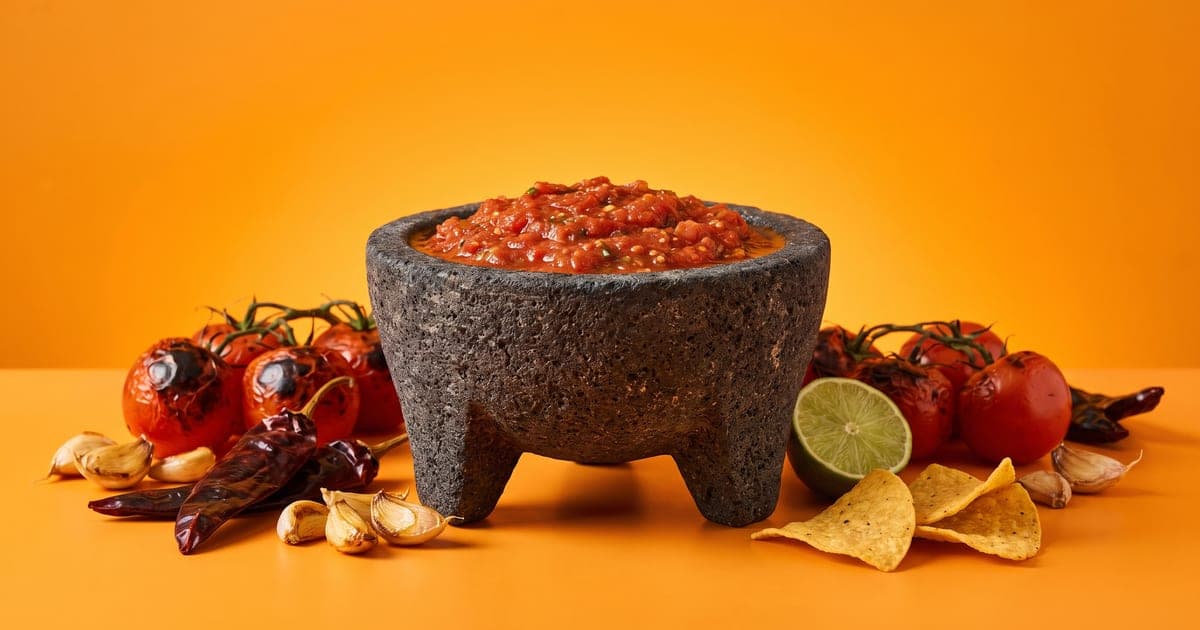
This authentic Mexican salsa recipe is a roasted red salsa made in a molcajete: you char tomatoes, garlic and onion on a dry skillet, toast a few dried chiles de árbol, then crush everything with salt until it's chunky rather than smooth. It takes about 25 minutes and tastes like home: smoky, spicy and fresh. Further down you'll also find salsa verde, pico de gallo and a dried chile salsa.
Updated · 8 min read · By the MexGoodies team
In this guide ▾
- Recipe
- What is Mexican salsa?
- How do you make an authentic roasted red salsa?
- How do you toast dried chiles without burning them?
- Molcajete or blender: which is better for salsa?
- How do you make salsa verde, pico de gallo and dried chile salsa?
- How long does homemade salsa last in the fridge?
- Where can you buy dried chiles and a molcajete in the U.S.?
- FAQ
Recipe
Makes About 1 1/2 cups · Prep 10 min · Cook 15 min
Ingredients
- 4 ripe Roma tomatoes (about 1 pound)
- 4 to 6 dried chiles de árbol, depending on how spicy you like it (or 3 cascabel chiles for a milder salsa)
- 2 garlic cloves, unpeeled
- 1 thick slice of white onion (about 1/4 onion)
- 1/2 to 1 teaspoon coarse salt or sea salt, to taste
- 2 to 4 tablespoons water, only if needed
Instructions
- 1.Heat a comal or cast-iron skillet over medium-high heat, with no oil. Add the whole tomatoes, the unpeeled garlic and the onion slice.
- 2.Roast, turning now and then, until they're blistered with black spots and soft: about 6 to 8 minutes for the garlic, 8 to 10 for the onion and 10 to 12 for the tomatoes, until the skins split. Take each one off as it's done.
- 3.Lower the heat to medium-low and toast the chiles de árbol for 20 to 30 seconds per side, moving them constantly, until they darken slightly and smell toasty. If one turns black, toss it: burnt chiles make salsa bitter.
- 4.Peel the garlic. In the molcajete, grind the chiles with the salt until they break into small flakes, then add the garlic and onion and crush into a coarse paste.
- 5.Add the tomatoes one at a time, charred skins and all (or peel them if you prefer), and crush them with the tejolote in a circular motion until the salsa is chunky, with small bits of tomato.
- 6.Taste and adjust the salt. If it's too thick, add water a tablespoon at a time.
- 7.Let the salsa rest about 10 minutes so the flavors come together, then serve it right in the molcajete with tortilla chips, tacos, eggs or carne asada.
What you need, shipped to your door
What is Mexican salsa?
Mexican salsa is any mix of chile with tomatoes, tomatillos or dried chiles that's served alongside a meal, and Mexico has as many salsas as it has kitchens. The everyday three are salsa roja (red salsa), made with tomatoes and chile; salsa verde, made with tomatillos; and pico de gallo, which is chopped and raw.
One naming note: in Mexico, “salsa mexicana” often means pico de gallo specifically, the chopped tomato, onion and green chile mix, also called salsa bandera because it shows the colors of the flag. In the U.S., “Mexican salsa” covers all of them. This recipe is a roasted red salsa made in a molcajete (the volcanic stone mortar of Mexican kitchens), the one that goes on the table with tacos, eggs and carne asada.
How do you make an authentic roasted red salsa?
An authentic red salsa comes down to three steps: char, toast and crush. Charring, or tatemar, means roasting on a comal (the flat round griddle of Mexican kitchens) until the skins of the tomatoes, garlic and onion blacken in spots, which is where the smoky flavor comes from. Toasting means giving the dried chiles a few seconds on the comal to wake up their aroma. Crushing means grinding everything in the molcajete with salt, starting with the toughest ingredients, chiles and garlic, and finishing with the juiciest, the tomatoes.
The chile sets the flavor. Chile de árbol, thin and red, gives a clean, spicy salsa; guajillo adds more color and less heat; round cascabel brings a toasted, nutty flavor and only mild heat. You can mix them: two árbol and one cascabel make a good table salsa for the whole family. If you have crushed chile de árbol, which comes already broken up, add it straight to the molcajete with the salt: start with 1/2 teaspoon and add more to taste.
How do you toast dried chiles without burning them?
Toast dried chiles over medium-low heat, a few seconds per side, keeping them moving, and pull them off as soon as they smell toasty and darken just slightly. A burnt chile turns black, gives off a harsh smoke and makes the whole salsa bitter, so it's better to under-toast than over-toast. The tried-and-true tricks:
- Wipe the chiles with a damp cloth first to remove any dust.
- For less heat, pull off the stems and shake out the seeds before toasting.
- Thin chiles like árbol take 20 to 30 seconds per side; larger ones like ancho, pasilla or a split cascabel take a little longer.
- Press them lightly against the comal with a spatula so they toast evenly.
- If you just roasted the tomatoes, turn the heat down before adding the chiles: a very hot comal burns them in seconds.
- For blended salsas made with larger chiles, soak them in hot water for 10 to 15 minutes after toasting so they soften.
- Open a window or turn on the vent: chile smoke will make you cough.
Molcajete or blender: which is better for salsa?
For a chunky red salsa, the molcajete wins: it crushes instead of blending, so the salsa keeps its texture and the garlic and chile release more aroma. A blender is faster and makes a smooth salsa, like the kind at many taquerías. That works too; just use short pulses if you want it chunky.
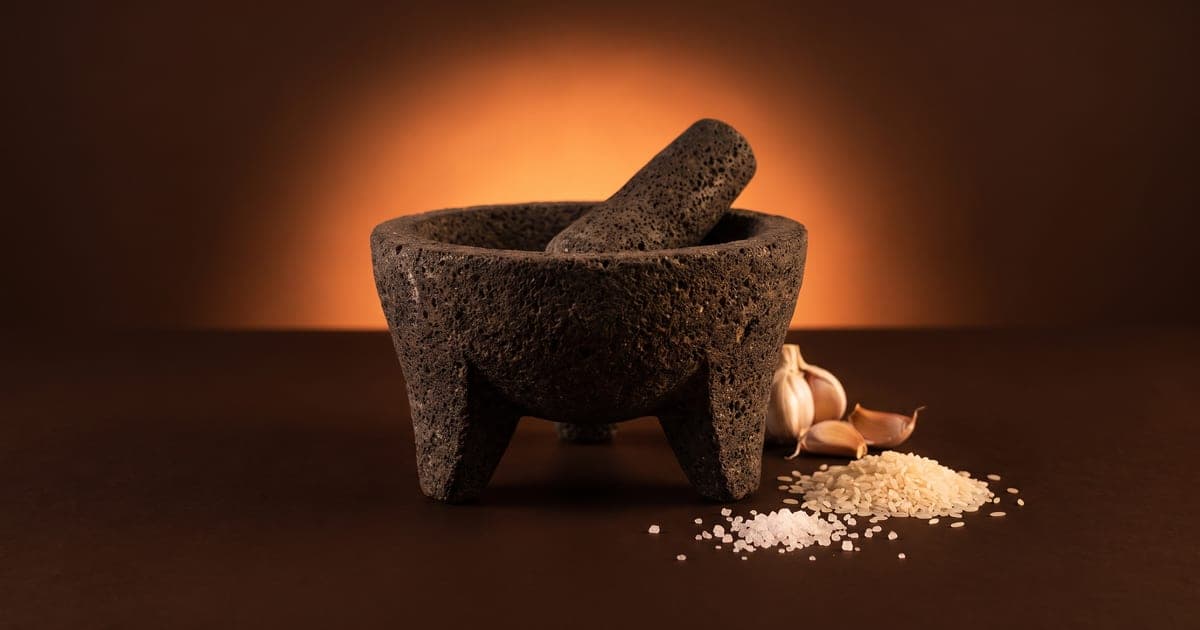
A new molcajete needs one step before its first salsa: seasoning, which means grinding raw rice until the stone stops shedding grit. After that, wash it with water and a brush only, no soap. And as grandmothers like to say, the more salsas a molcajete makes, the better the next one tastes.
How do you make salsa verde, pico de gallo and dried chile salsa?
The same basic technique gives you three more homemade salsas: salsa verde is made with boiled or roasted tomatillos, pico de gallo is chopped raw, and dried chile salsa uses soaked chiles. Here's how to make each one:
- Salsa verde: simmer 1 pound of tomatillos (the husked green tomato) with 2 or 3 serrano chiles for 8 to 10 minutes, until they turn olive green. Grind or blend them with 1 garlic clove, a piece of onion, a handful of cilantro and salt. Char them on the comal instead of boiling and you get a smokier roasted salsa verde.
- Pico de gallo (salsa mexicana or salsa bandera): dice 3 tomatoes, 1/2 white onion, 1 or 2 serrano chiles and a handful of cilantro. Toss with lime juice and salt and serve right away.
- Dried chile salsa: toast 3 or 4 larger dried chiles, such as cascabel or pasilla (if you use dried chipotle or morita, which are hotter, start with 1 or 2), soak them in hot water for about 15 minutes, then blend with 1 garlic clove, a roasted tomato or a few roasted tomatillos, a little of the soaking water and salt. It makes a dark, deep salsa that's great on crispy fried tacos and grilled meat.
Salsa verde
Boiled or roasted tomatillos
- Tomatillos with 2 or 3 serrano chiles
- Simmered 8 to 10 minutes, until olive green
- Ground with garlic, onion, cilantro and salt
- Charred on the comal, it comes out smokier
Pico de gallo
Chopped and raw
- Diced tomato, white onion, serrano chile and cilantro
- Tossed with lime juice and salt
- Served right away
- Also called salsa mexicana or salsa bandera
Dried chile salsa
Made with soaked chiles
- Larger chiles like cascabel or pasilla, toasted
- Soaked in hot water for about 15 minutes
- Blended with garlic, a roasted tomato or tomatillos, and salt
- Dark and deep: for crispy tacos and grilled meat
How long does homemade salsa last in the fridge?
As a rule of thumb, homemade red or green salsa keeps about 3 to 4 days in the fridge in a tightly closed glass jar; pico de gallo, since it's raw, is best the same day and lasts 1 or 2 days at most. Always serve it with a clean spoon, and if it smells sour, bubbles or grows mold, throw it out.
That's why many Mexican households make salsa in small batches, and often. With a hot comal and the molcajete on the counter, a fresh salsa is ready in the time it takes to warm the tortillas.
- homemade red or green salsa, in a tightly closed glass jar
- 3 to 4 days
- pico de gallo, at most: it's best the same day
- 1 or 2 days
- every time you serve it; if it smells sour, bubbles or grows mold, toss it
- Clean spoon
Where can you buy dried chiles and a molcajete in the U.S.?
Tomatoes, tomatillos, onion, garlic, cilantro and fresh chiles are at your grocery store, and dried chiles de árbol are easy to find in the Hispanic aisle of many U.S. supermarkets. What's harder to track down is a real volcanic stone molcajete and the less common dried chiles.
At MexGoodies you'll find volcanic stone molcajetes with tejolote (the stone pestle) in three sizes, plus cascabel, pasilla, ancho, dried chipotle, chiltepín and crushed chile de árbol, which comes already broken up and saves you the toasting step. They're original Mexican products, shipped anywhere in the U.S. in 3 to 7 days (Canada too).
Frequently asked questions
Why did my salsa turn out bitter?
Almost always because of a burnt chile. Toast chiles over medium-low heat for just a few seconds, and if one turns black, don't use it.
Can you make red salsa without a molcajete?
Yes, in a blender or food processor. Pulse briefly for a chunky salsa, or blend longer for a smooth, taquería-style one.
How do I make salsa less spicy?
Use fewer chiles, remove the seeds and veins, or swap some of the chile de árbol for cascabel or guajillo, which are milder.
What's the difference between jitomate and tomate?
It depends on the region. In central Mexico, the red tomato is called jitomate, while “tomate” or “tomate verde” means the tomatillo used in salsa verde. In other regions, the red one is simply tomate.
Is Mexican salsa the same as pico de gallo?
In Mexico it often is: “salsa mexicana” is another name for pico de gallo. More broadly, though, Mexican salsa means any salsa from Mexican cooking, like the roasted molcajete salsa in this recipe.
Craving it already? 😏
More recipes & guides
See all → Mexican cooking
What Is Mexican Mole Sauce? Types, Flavor and an Easy Chicken Mole
 Mexican cooking
What Is Tajín Seasoning and How Do You Use It?
 Mexican cooking
Mexican Hot Sauce Brands: Which Is Which and What Each One Is For
 Mexican cooking
Mexican Breakfast: 9 Classic Mexican Breakfast Dishes to Make at Home
 Mexican cooking
How to Make Tamales: Red Pork Tamales and an Easy Tamale Masa Recipe
 Mexican cooking
How to Season a Molcajete, Step by Step