
🫔How to Make Tamales: Red Pork Tamales and an Easy Tamale Masa Recipe
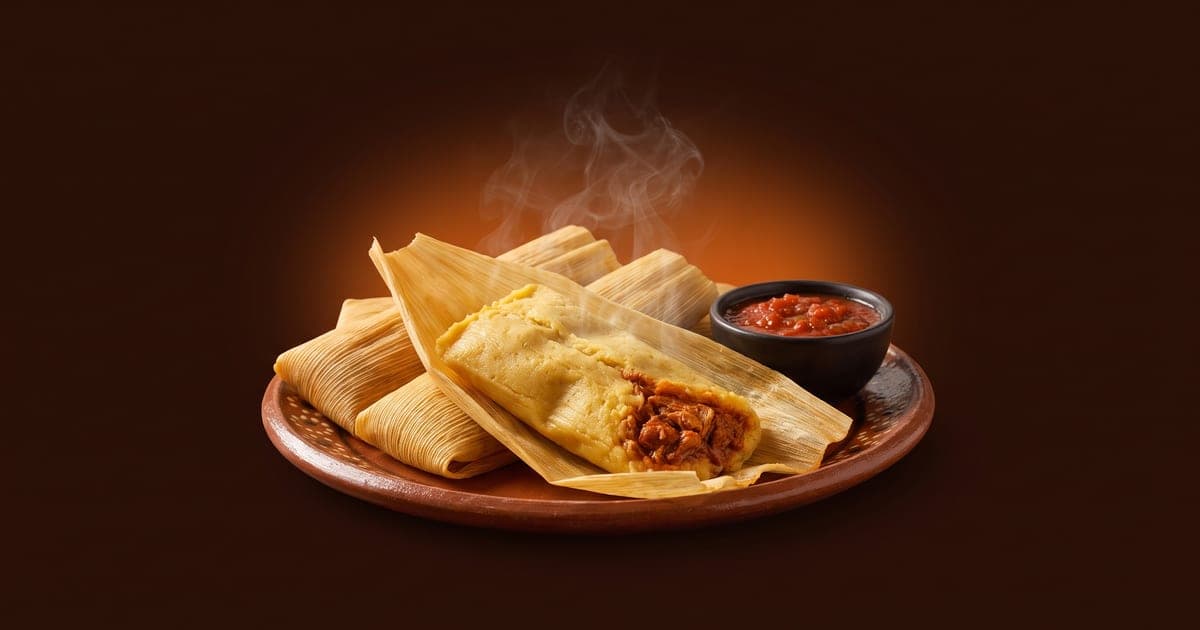
Here's how to make tamales at home: whip corn masa with lard and broth until a little ball floats in water, spread it on soaked corn husks, add a filling (here, pork in red chile sauce), fold them up and steam them upright for an hour to an hour and a half, until the masa pulls away cleanly from the husk. Tamales are simply Mexican corn masa, filled, wrapped and steamed. It's an all-day, all-hands family recipe, perfect for Christmas, the posadas or February 2.
Updated · 9 min read · By the MexGoodies team
In this guide ▾
Recipe
Makes About 24 tamales · Prep 1 h 30 min · Cook 3 h
Ingredients
- Filling: 2 pounds boneless pork shoulder, cut into large chunks
- 1/2 white onion and 4 garlic cloves, divided
- 1 bay leaf and salt to taste
- 6 guajillo chiles and 2 ancho chiles, stemmed and seeded
- 1/4 teaspoon ground cumin
- 1 tablespoon chicken bouillon powder, or to taste
- Masa: 4 cups Maseca for tamales (tamal masa harina)
- 1 1/3 cups lard or vegetable shortening, plus 1 tablespoon for the sauce
- 3 1/2 cups warm broth from cooking the pork, plus more as needed
- 1 teaspoon baking powder
- 1 teaspoon salt
- To assemble: 30 to 35 dried corn husks, plus extra to line the steamer
Instructions
- 1.Cook the pork: put it in a large pot with 1/4 of the onion, 2 garlic cloves, the bay leaf, salt and enough water to cover (about 8 cups). Bring to a boil, then lower the heat and simmer, covered, for about 1 1/2 hours, until it falls apart with a fork. Lift out the meat, shred it and strain and save the broth.
- 2.Meanwhile, soak the corn husks in very hot water, with a plate on top to keep them submerged, for 30 minutes to 1 hour, until pliable.
- 3.Make the sauce: soak the chiles in hot water for 15 minutes. Blend them with the remaining onion and garlic, the cumin and 1 cup of the broth, then strain. Fry the sauce in 1 tablespoon of lard over medium heat for about 5 minutes, season with the bouillon powder, add the meat and cook 10 more minutes, until thick. Let it cool.
- 4.Make the masa: in a bowl, mix the tamal masa harina, baking powder and salt, then add the warm broth a little at a time until you have a soft dough. In another bowl, beat the lard with a mixer for about 5 minutes, until white and fluffy.
- 5.Add the dough to the lard in batches, beating as you go, then keep beating for 5 to 10 minutes. Do the float test: drop a small ball of masa into a glass of cold water. If it floats, it's ready; if it sinks, beat a few minutes more. It should be soft and spreadable; if it's stiff, beat in a splash of broth.
- 6.Assemble: shake off a husk and spread about 3 tablespoons of masa in a thin layer over the wide, smooth side, leaving the pointed end bare. Add 1 to 2 tablespoons of filling down the center, fold the sides in to close it, then fold the pointed end up.
- 7.Add water to the bottom of the steamer without letting it touch the rack, line the rack with husks and stand the tamales upright, open end up, snug but not squeezed. Cover with more husks and a clean kitchen towel, then put the lid on.
- 8.Steam over medium heat for 1 to 1 1/2 hours, checking the water every 30 minutes and topping it up with hot water as needed. To test, pull one out, let it rest 5 minutes and unwrap it: if the masa comes away cleanly from the husk, they're done. If it sticks, give them 15 more minutes.
- 9.Turn off the heat and let the tamales rest, covered, for about 15 minutes before serving so they firm up.
What you need, shipped to your door
What are tamales?
Tamales are portions of nixtamalized corn masa (corn cooked with lime, the same dough used for tortillas) whipped with lard and broth, filled or plain, wrapped in a leaf and steamed. The word comes from the Nahuatl tamalli, and their history goes back to pre-Hispanic times: wrapped, cooked corn was everyday food long before the Spanish arrived.
Today there are tamales all over Mexico, and every region has its own. In central and northern Mexico they're wrapped in dried corn husks, called totomoxtle in Nahuatl; in the south and southeast, they're wrapped in banana leaves. The red pork tamales in this recipe are a tamalada classic: the family get-together where everyone pitches in spreading masa on husks.
How do you make tamale masa?
Tamale masa is made by mixing tamal masa harina with broth, baking powder and salt, then beating it with lard until it's fluffy and a small ball floats in water. That float test is the grandmother secret: if it floats, the masa has enough air and the tamales will come out tender; if it sinks, keep beating.
The flour matters. Maseca for tamales is ground coarser than the Maseca for tortillas, which helps the masa turn out fluffy. Tortilla masa harina works in a pinch, but the tamal version is made for the job. This tamale masa recipe uses the standard home ratio: for every 4 cups of masa harina, 1 1/3 cups of lard and about 3 1/2 cups of broth, or whatever your bag recommends. You're aiming for a soft masa that spreads easily, like peanut butter.
The classic fat is pork lard, which gives tamales their traditional flavor. Vegetable shortening whips the same way and works well. You can make tamales with oil too, but the masa won't get as fluffy, since oil doesn't trap air the way whipped lard does.
- tamal masa harina
- 4 cups
- lard or vegetable shortening
- 1 1/3 cups
- broth, roughly, or whatever your bag recommends
- 3 1/2 cups
- a small ball of masa in water: the sign it's whipped enough
- It floats
How do you know when tamales are done?
Tamales are done when the masa pulls away cleanly from the husk: take one out of the steamer, let it rest 5 minutes and unwrap it. If the husk peels off clean and the masa looks set, they're ready; if the masa sticks or looks pasty, they need another 15 to 20 minutes.
A full steamer usually takes an hour to an hour and a half over medium heat. The most common problem is the water: if it runs dry, the tamales scorch on the bottom, and if it touches the rack, they get soggy. That's why a lot of families drop a coin in the bottom of the steamer: as long as it rattles, there's still water.
What other tamale fillings are there?
Besides red pork, the most common homemade tamales are green chicken, rajas with cheese and sweet tamales. The masa and the wrapping stay the same; only the filling changes, plus the masa itself for the sweet ones:
- Green chicken: shredded chicken in a salsa verde of tomatillos, serrano chile and cilantro. A jar of salsa verde saves you a step.
- Rajas con queso: strips of roasted poblano or jalapeño with a strip of cheese, like Oaxaca or queso fresco, and sometimes tomato. A great meatless option.
- Sweet tamales: the masa is sweetened with sugar and made with water or milk instead of broth; sometimes it's tinted pink and studded with raisins, pineapple or coconut.
- Regional tamales: Oaxacan ones in banana leaves with mole negro, or corundas and uchepos from Michoacán. Every region has its own.
When are tamales eaten, and what goes with them?
Tamales are eaten all year, especially in winter, and they almost always come with atole, champurrado or café de olla. Their big season is Christmas, the December posadas and February 2, Día de la Candelaria, when whoever found the baby figurine in the Three Kings rosca has to treat everyone to tamales. In the U.S., the Christmas tamalada is a tradition for many Mexican families.
Tamales and atole are breakfast and dinner all over Mexico, and tamales and champurrado, the chocolate atole made with masa, are the cold-weather pairing. In Mexico City, people even tuck a tamal into a bolillo roll to make the famous guajolota.
How do you reheat and freeze tamales?
The best way to reheat tamales is to steam them for 15 to 20 minutes, and to freeze them, just pack them cooled, husks on, in freezer bags. Steaming leaves them tasting freshly made, but there are two quicker ways to reheat them:
To store them, let them cool in their husks. In the fridge, in a covered container, they keep 3 to 4 days. In the freezer, in bags with the air pressed out, they hold up well for a couple of months. Steam them straight from frozen for about 30 to 40 minutes, or thaw them overnight in the fridge first.
- Microwave: wrap the tamal, husk and all, in a damp paper towel and heat for 1 to 2 minutes.
- Comal or skillet: husk on, over medium heat, turning now and then, for about 10 minutes. They get toasty on the outside, the classic next-day tamales asados.
Steamed
The best way
- 15 to 20 minutes
- They taste freshly made
- Straight from frozen, about 30 to 40 minutes
Microwave
Quick
- Husk and all
- Wrapped in a damp paper towel
- 1 to 2 minutes
Comal or skillet
Toasty outside
- Husk on, over medium heat
- Turning now and then, about 10 minutes
- The classic next-day tamales asados
Where can you buy Maseca for tamales in the U.S.?
You can order Maseca for tamales online from MexGoodies, along with ancho chiles, Knorr chicken bouillon powder and salsa verde for green tamales. They're original products from Mexico, shipped anywhere in the U.S. in 3 to 7 days (Canada too), so order ahead of your tamalada.
Pork, lard, cheese and corn husks for tamales are at your grocery store or butcher; look for the husks in the Latin foods aisle, especially in December. Guajillo chiles and baking powder come from your grocery store too.
Frequently asked questions
How many tamales does a 1 kg bag of Maseca make?
It depends on size. This recipe uses about 4 cups of masa harina (roughly 480 g) and makes about 24 medium tamales, so a 1 kg bag covers a little over two batches.
Why did my tamales turn out hard?
It's almost always the masa: it needed more beating, more broth or more fat. Do the float test before assembling and make sure the masa is soft and spreadable.
Do you steam tamales standing up or lying down?
Standing up, open end on top. That way the steam circulates evenly and the filling stays put.
Can you make tamale masa without lard?
Yes. Vegetable shortening whips just like lard; with oil, the masa stays soft but comes out less fluffy.
Can you make tamales a day ahead?
Yes. Make the filling a day ahead and refrigerate it, or steam the tamales completely and reheat them in the steamer the next day.
Craving it already? 😏
More recipes & guides
See all → Mexican cooking
What Is Mexican Mole Sauce? Types, Flavor and an Easy Chicken Mole
 Mexican cooking
What Is Tajín Seasoning and How Do You Use It?
 Mexican cooking
Mexican Hot Sauce Brands: Which Is Which and What Each One Is For
 Mexican cooking
Mexican Salsa Recipe: Authentic Roasted Red Salsa in a Molcajete
 Mexican cooking
Mexican Breakfast: 9 Classic Mexican Breakfast Dishes to Make at Home
 Mexican cooking
How to Season a Molcajete, Step by Step